Matthew Boback · Toronto, Canada
Backend engineering.
Built around real work.
I’m Matthew, a backend and platform engineer at MnB Security. I build software for managing building access, researching potential customers, checking websites, and preparing job applications.
Open to backend and platform roles · Toronto, hybrid, or remote
Two projects, from the problem to the product.
StageFlow and AlchemizeCV, two independent products. Here’s what I built, why I made those choices, and what I learned along the way.
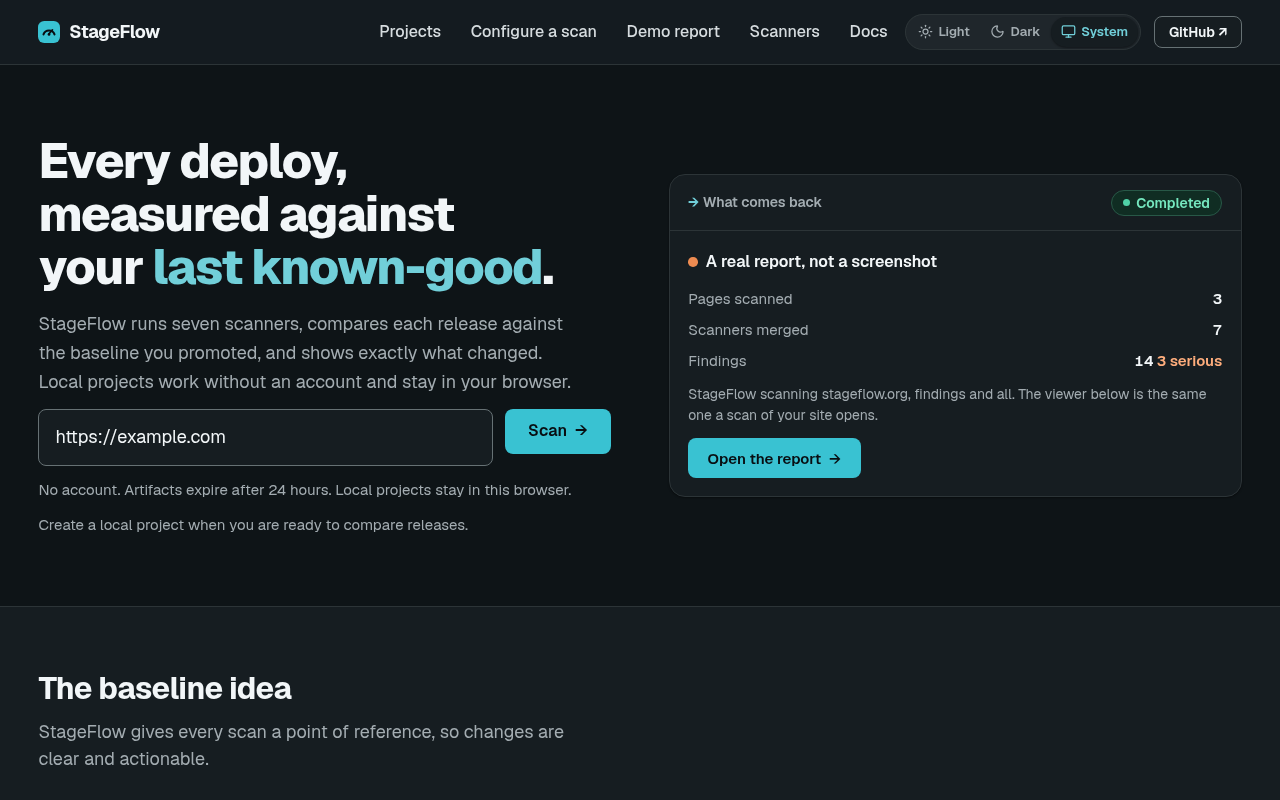
StageFlow
A frontend quality tool I build and operate. Five kinds of checks produce one report, with page evidence and saved baselines to show what changed between deployments. Developers can scan public URLs or local builds and use the results in a release check.
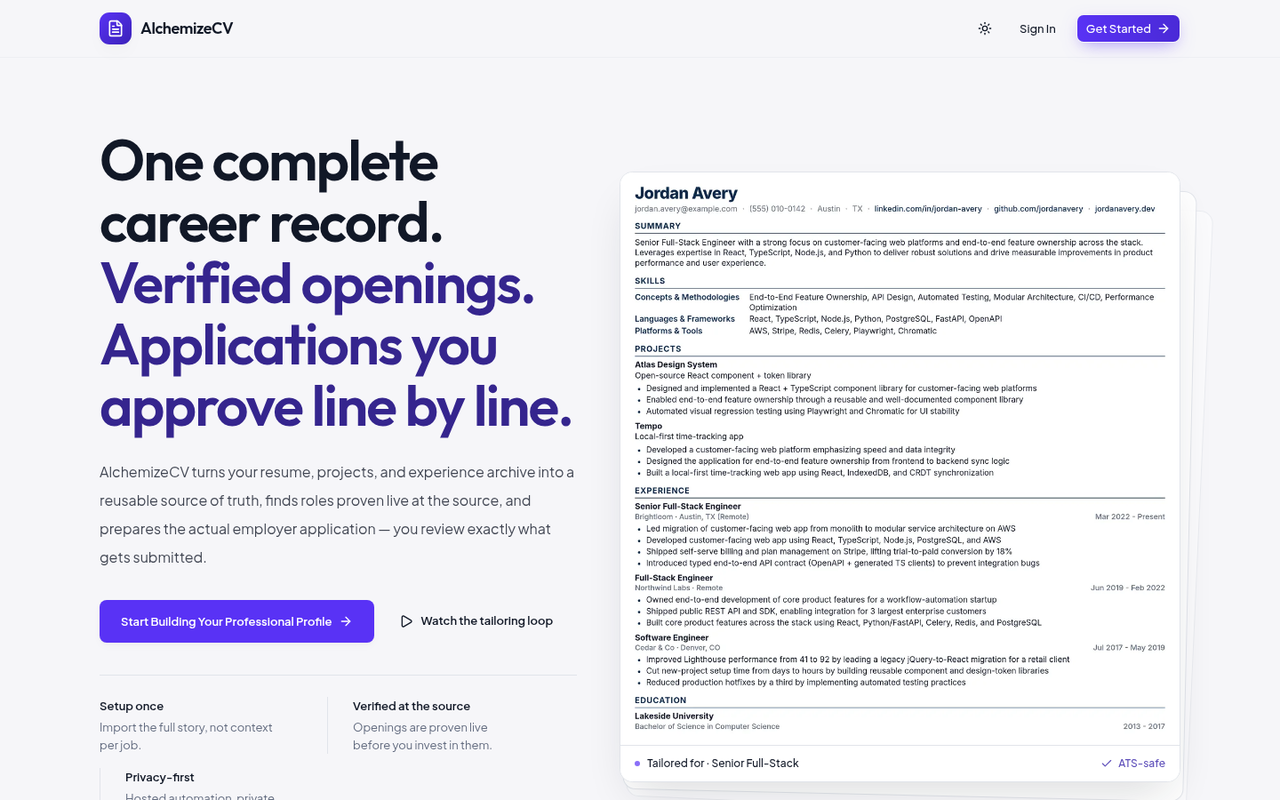
AlchemizeCV
A live job-application product I build and operate alone. Applicants turn their experience into reusable material, find roles and prepare a résumé, cover letter and form answers together. They review the result before approving supported Greenhouse submission.
Give a website a quick check.
Enter a public URL to run a live scan for accessibility, performance, SEO, links, and security headers. The results link to a report you can explore.
How I built StageFlowA few things I’ve been working on.
- 2026-09A clearer picture of what changed on a websiteFive scanners feed one report. Comparing two sample builds checks that new, fixed, and unchanged issues appear in the right groups.
- 2026-08Making AlchemizeCV simpler to runAn August rewrite removed overlapping ways of tracking the same work, making the product simpler to operate while keeping application review in the user’s hands.
Looking for a backend or platform engineer?
I enjoy taking a project from the first design through to the interface, testing, and deployment. I’d like to hear what your team is building.